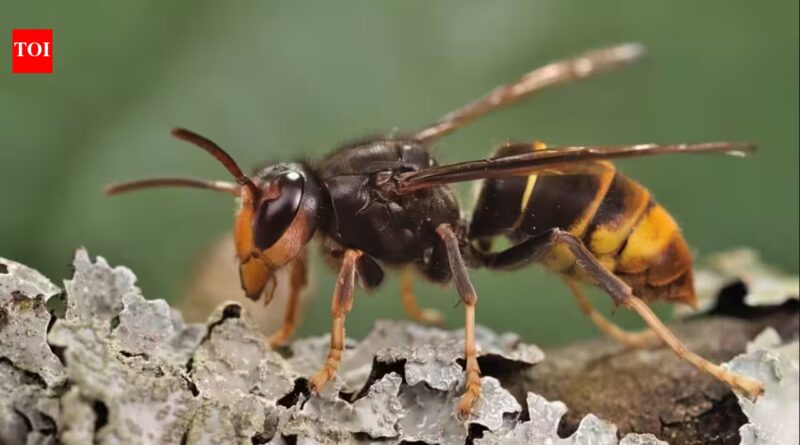
In 2023, America’s first live yellow-legged hornet, a bee-killing predator, was found in Georgia; by 2026, officials had trapped 866 and destroyed 44 nests
[
State agriculture teams in Georgia have trapped at least 866 invasive yellow-legged hornets and destroyed 44 active nests so far this year, according to official data released by the Georgia Department of Agriculture.The figures, listed on the state’s public yellow-legged hornet eradication dashboard, show the latest progress in an intensive control campaign that began after the first live specimen of the bee-killing insect was confirmed in Georgia in 2023.The invasive pest, which is native to Southeast Asia, poses a major threat to natural pollinators, farm crops, and food production across the southern United States.State officials said the hornets have been confirmed in five Georgia counties this year: Bryan, Bulloch, Chatham, Effingham, and Liberty.The scale of the eradication effort remains significant. Data published by the Georgia Department of Agriculture shows officials dealt with a total of 95,530 yellow-legged hornets across the state during 2025 alone.
Early spring emergence and growing nest threat
The yellow-legged hornet, scientifically known as Vespa velutina, grows to about two centimetres in length. It has a dark, slim body, yellow-tipped legs, and a clear yellow band on its fourth abdominal segment.Although it is often compared with the larger northern giant hornet, the yellow-legged hornet creates a different ecological risk because of the way it hunts and how quickly it reproduces.The species comes out of winter hibernation in early spring, when fertilized queens build small primary nests. If these early nests are not destroyed, the queens continue producing worker hornets through the summer. This allows colonies to grow rapidly into much larger secondary nests by late summer and autumn.Recent inspections by the Georgia Department of Agriculture’s Plant Protection Division found an increase in “hawking” behaviour near domestic beehives.Hawking happens when adult hornets hover outside honeybee hives and attack worker bees as they return carrying nectar and pollen. Transport experts and entomologists say this behaviour shows that hornet colonies have entered the important secondary nesting stage.The loss of honeybees threatens commercial fruit, nut, and vegetable crops that depend on insect pollination, increasing concerns among farmers across the region. Sightings of the yellow-legged hornet have also been reported in neighbouring states, including South Carolina and Alabama.
State agriculture chief calls for public help
As secondary nests continue appearing high in trees, state officials are asking residents and landowners to help by reporting suspected hornet activity.In a public statement, Georgia Department of Agriculture Commissioner Tyler J. Harper stressed that community support is essential to stop the pest from becoming permanently established.“Georgia has made significant progress in tracking and eliminating the Yellow-legged Hornet, but our success depends on continued public support,” said Georgia Department of Agriculture Commissioner Tyler J. Harper. “The sooner a nest is identified and reported, the sooner our team can respond. We are asking every Georgian to remain vigilant and help us keep this invasive species from gaining a foothold in our state.“State guidance advises people to look for large, round or oval paper-like nests made from layers of grey or brown pulp. These secondary nests are usually found high in tree branches or under the eaves of buildings and often remain visible through late summer and winter.Officials also ask residents who see hornets hovering near beehives, especially before noon or after 5 p.m., to record the location and report it immediately.The department strongly advises people not to remove or destroy hornet nests themselves. If a nest is not completely destroyed, the queen may escape and start a new colony elsewhere. Instead, suspected sightings should be reported to the Plant Protection Division or a licensed pest control professional so the entire colony, including the queen, can be safely eliminated.
Birds provide only limited natural control
As wildlife experts look at long-term control options, questions have been raised about whether native birds can help reduce yellow-legged hornet numbers.In an analysis published by ornithology magazine Birds & Blooms, naturalists Kenn and Kimberly Kaufman discussed whether native birds prey on paper-nest wasps and hornets.They explained that birds rarely hunt active adult wasps or hornets during summer because of the danger of being stung. However, some bird species feed on nests after cold weather arrives.“Bald-faced hornets build nests of gray paperlike material, made from chewed-up bits of wood. They use them for only one season. As cold weather approaches, the queen hornet leaves to spend the winter in hibernation elsewhere. The other adult hornets, as well as the last larvae and pupae, remain in the nest. There, they grow sluggish and eventually freeze to death. Once they’re immobilized, various birds may rip open the nest to eat the hornets inside. This has been documented for blue jays, woodpeckers and others,” Kenn and Kimberly Kaufman wrote in Birds & Blooms.The naturalists added that intelligent birds such as blue jays have also been seen knocking adult stinging insects to the ground before eating them and tearing open smaller paper nests to feed on the protein-rich larvae.However, state entomologists say this seasonal bird activity is not enough to stop the spread of invasive yellow-legged hornets during their active summer breeding season. Careful monitoring, public reporting, and targeted nest removal remain the main methods for eliminating the species from Georgia.