3,500-year-old residential complex discovered in Egypt with connections dating back to the bible era | World News
[
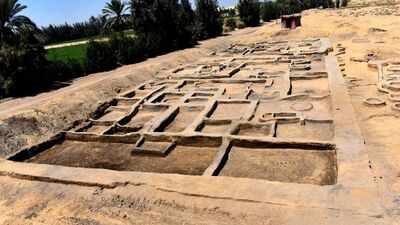
Archaeologists have recently discovered an ancient settlement at Tell el-Koua, situated within the Wadi Tumilat region of Ismailia. This discovery was announced in late June 2026 by the Ministry of Tourism and Antiquities(Egypt). It revealed a well-preserved site dating back to Egypt’s Second Intermediate Period. For decades, historians and researchers thought that this corridor of the eastern Nile Delta is a connection between the civilisations of Egypt and the Levant.The findings at Tell el-Koua provide a rare view of daily life during a time of social and political transition, specifically the 15th Dynasty. By revealing a network of residential buildings, industrial facilities, and burial grounds, the excavation provides fresh evidence of how ancient communities functioned on the outskirts of the empire, acting as a vital hub that connected Egypt with the growing cultures of Canaan.
What structures did the archeologists find at Tell el-Koua
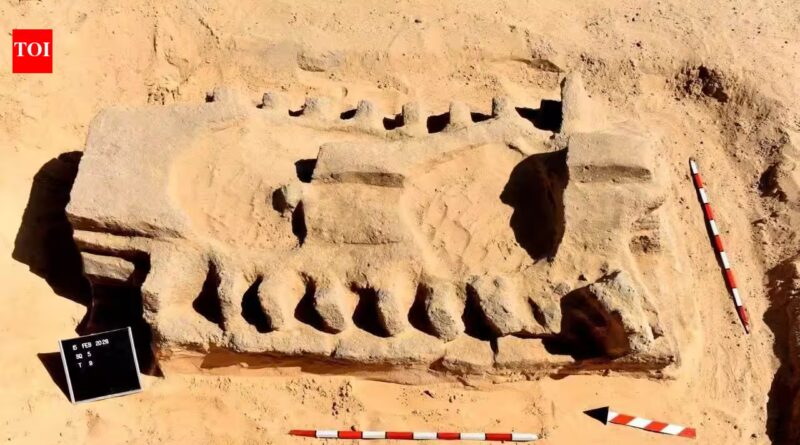
The excavation at Tell el-Koua has painted a picture of a bustling, integrated community where people did much more than simply survive. According to HeritageDaily, the mission uncovered a large residential complex measuring roughly 30 by 60 metres, protected by a mudbrick wall nearly 1.5 metres thick. The team found a series of well-planned buildings with multiple halls and rooms in there. To the east, archaeologists found ovens and storage facilities, which proves that the residents were engaged in both domestic cooking and larger-scale production.As the Biblical Archaeology Society notes, the layout of the site shows that this was a complete settlement where people lived, worked, and traded in a highly organised manner. The presence of these permanent structures, alongside industrial installations, indicates that Tell el-Koua was not just a temporary camp but a settled outpost designed to support a stable population over several generations.
Is this site really the biblical land of Goshen
The location of the find is particularly striking for those interested in historical geography. The Biblical Archaeology Society explains that scholars have long associated the Wadi Tumilat region with the ‘Land of Goshen,’ the fertile area described in the Bible as the place where the patriarch Joseph settled his family. This region was famed for being suited to cattle and flocks, often referred to as ‘the best of the land.‘The discovery of a settlement that functioned as a commercial hub fits neatly into this historical context. The site is located along a principal route that linked the eastern Delta with Egypt’s eastern frontier. This unique position would have made it a perfect location for the movement of people and goods between Egypt and Canaan, just like the biblical accounts of migration and trade that define the story of Joseph and the early Israelites.
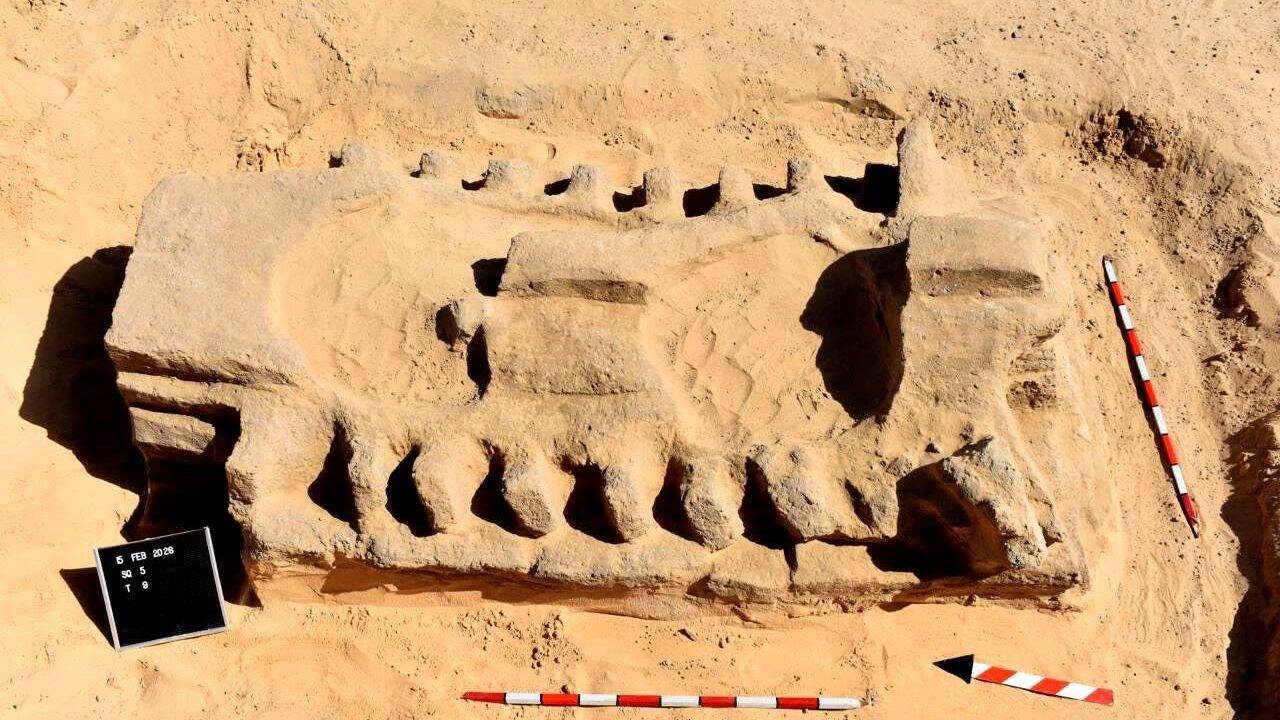
Excavations at the site. Image Credit: Egyptian Ministry of Tourism and Antiquities
Who were the Hyksos people living here
The residents of Tell el-Koua existed during the 15th Dynasty, which was a period also known as the Hyksos rule. The ancient Egyptian accounts portrayed the Hyksos as violent invaders, but the Biblical Archaeology Society points out that modern archaeology suggests a more peaceful reality. These were possibly Semitic people from Canaan who moved into the Nile Delta over several generations as traders, craftspeople, and migrants.As per HeritageDaily, the artefacts found at the site, such as pottery with specific production marks and seals, suggest that these people were part of extensive trade networks. They were deeply integrated into the local economy, and their presence at Tell el-Koua confirms that they had established a firm foothold in the eastern Delta. The Biblical Archaeology Society further highlights that the career of Joseph, a Semitic man who rose to power in the Egyptian court, fits most plausibly within this specific historical ‘Hyksos milieu.’
What secrets do the burial grounds hold
Perhaps the most humanising aspect of the discovery is found in the burial practices uncovered by the mission. HeritageDaily reports that ten mudbrick tombs of varying sizes and styles were found, including rectangular ‘mastaba’ tombs and others with decorative architectural façades. These variations suggest that the communities were of different social statuses and influences.Researchers found the remains of individuals aged between 25 and 40 years inside these graves. For the first time at this site, archaeologists discovered human burials located outside tombs. Some of these individuals were placed in a crouched position, a practice that is not common to the region and period, therefore requiring further scientific investigation to understand its meaning. Large quantities of animal bones were found near the human remains, suggesting that animals were part of the daily diet as well as the offerings made to honour the dead.
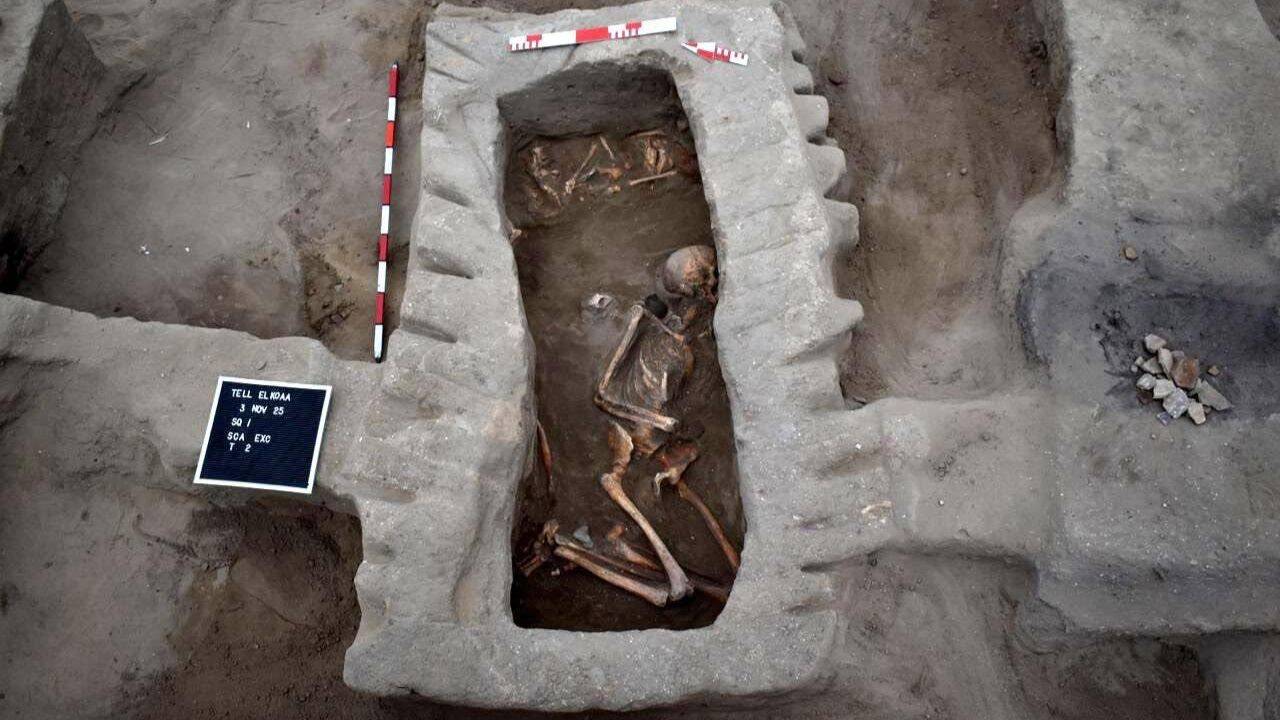
One of the tombs uncovered at Tell el-Ku’a. Image Credit: Egyptian Ministry of Tourism and Antiquities.
How does this discovery change the view towards history
The find at Tell el-Koua is important because it depicts a major turning point in Egyptian history, from the Second Intermediate Period to the New Kingdom. HeritageDaily reports that the settlement remained occupied until the middle of the 18th Dynasty, the period when native Egyptian pharaohs expelled the Hyksos rulers. This occupation provides vital evidence of how the common people lived through these harsh political shifts.By studying the tableware, cooking vessels, and bronze utensils left behind, archaeologists can move from the grand stories of pharaohs and focus on the everyday lives of people who lived in the Wadi Tumilat. It doesn’t matter if these residents were the direct ancestors of the biblical Israelites or simply their neighbours, the dust of Tell el-Koua is giving a voice to a community that has been silent for over 3,000 years.